Dave Dewbres' love affair with EVs and solar energy.
 |
Dave on his gas touring bike
in Tucson, AZ. |
Chronologically it all started in Tucson, Arizona. He already had a love of regular gas motorcycles. He loved the big touring bikes, being 6' feet tall. When he moved to the foothills of the Sta. Catalina and Rincon mountains in 2003, electric motorcycles were the latest thing and he decided to check them out.
He ordered a 3000 watt electric touring bike, and the love affair with electric vehicles began. This essay will be mostly in photos, as that is what I do.
 |
Dave enjoying his pool in AZ.
Sta. Catalina mountains in back. |
He lived at the foothills of two mountain ranges in Tucson. The Sta. Catalina and the Rincon mountains. It was an easy ride up either from his home. So much power beneath him, with no sound but the tires on the road, gave him a thrill he still experiences when driving his electric vehicles, currently on his farm lot in Palawan. He proceeded to order 2 more for backups so he could promptly tear the first one apart to see how it worked!
When he got the first electric motorcycle, he was CEO of his own corporation, Digital Web Group, Inc., a company selling online retail niché market products. One of which he himself designed out of his love for music and riding this motorcycles, the "DWG Waterproof Motorcycle speaker kit". If he got caught in the rain, he could still listen to his tunes! The amplifier of course was protected from the elements.
He was also flying high from the company's first product launch, an almost
 |
Dave Dewbre, CEO and
Diana Limjoco, CFO
Digital Webgroup, Inc. |
overnight sensation and had unprecedented continued, and remarkable sales. Then the waterproof speakers took off and he was one of 3 makers of such speakers in the world. His were for the masses of motorcycle enthusiasts who couldn't afford the $500.00 price tag of the higher end speakers, but the sound from his speakers was more than sufficient for most users.
Dave's partner at the time, shareholder/CFO of their company, was a FilAm woman, Diana J. Limjoco. The company was being run completely online from their main Stores, Virtual office to bookkeeping systems, except for the shipping department, they found they could run the business even while on trade shows or side trips.
In 2005 she suggested they head over to the Philippines to visit her parents, then in their late 80's. So they did. The long and short of it is that he fell in love with the Philippines and wound up living in Subic Freeport, high up in the pristine hills of the Kalayaan Housing area. He would divide his time between Subic and Tucson, enjoying his electric bikes in both places.
 |
Dave with 7 month old
daughter, Alysha. |
In Subic, he saw an Ad for electric motorbikes, much smaller than the one he had back in the US. He liked that he could drive around the beautiful forests and housing areas and not disturb anyone with the sounds of a gas bike. He wound up ordering 3 again, took one apart as well.
He expanded his company to include web page development with local talent while simply enjoying and learning all about the ins and outs of these electric motorbikes.
Dave began helping his supplier improve the bikes, making his own adjustments and fixes for his own use. He wound up knowing more about the bike than the supplier and later went to the factory in China to work with the engineers to add his ideas for safety and performance.
 |
Then-Mayor Edward Hagedorn in the new ET2
etrike with sidecar. Dave Dewbre driving. |
In 2009 an associate brought him to Puerto Princesa, Palawan to meet then-Mayor Edward Hagedorn, who had developed the Philippine's first electric tricycle using a traditional sidecar attached an electric motorbike, with a partner who unfortunately passed away before the etrike could be perfected. Dave brought in one of the same 3000-watt electric motorcycles he used in Arizona to attach to a sidecar. He found people to help him attach it to an old and heavy sidecar typically used in Puerto Princesa. It passed the test. Even the steepest hills could not slow this eT2 prototype version down. It was the cheapest, fastest and most user-friendly solution for the trike drivers, many of whom never got out of high school. And it worked! Eventually, this trike was used for city business and it put on over 30,000 kilometers.
 |
Mayor Edward Hagedorn driving the eT2
eletric tricycle. |
Dave feels it still is the easiest solution. The drivers are apt to try to fix things themselves in the provinces. When Dave had his service and sales shop in Puerto Princesa, when the electric bikes would come in for repairs, it was mainly from operator ignorance of a simple solution like a blown fuse, to cutting wires (which had plugs to easily remove or attach) and tried to fix them or local mechanics who had never seen such a thing, but would jerry-rig it anyway. The electric trikes plying the streets of Manila are a way too complicated for provincial drivers and also very much more expensive for initial cost as well as down the road expenses to replace the many batteries need for the fancy eTrikes with Unibodies.
 |
| eT3 etrike prototype. |
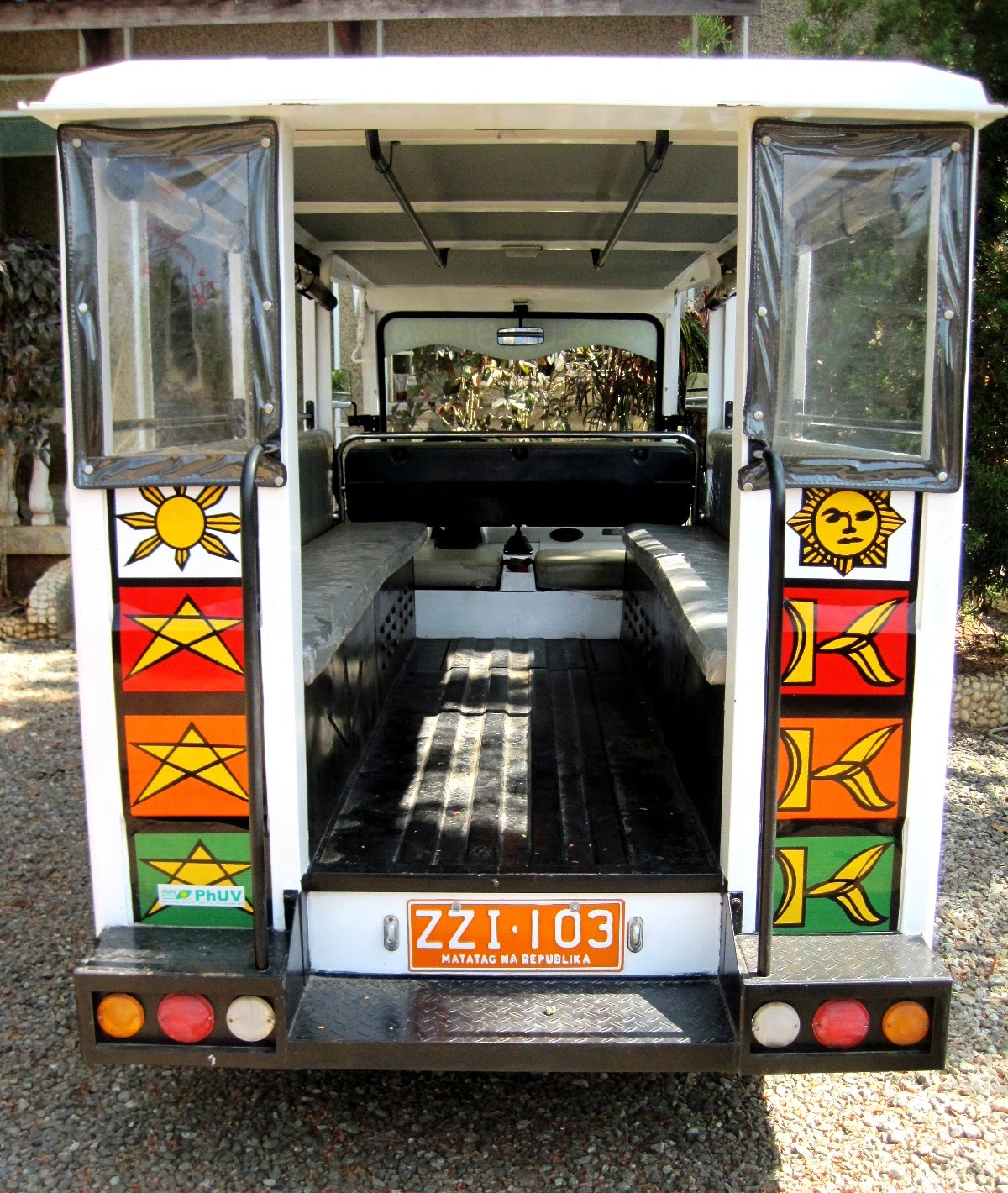
Dave relocated to Puerto Princesa in 2009 and mid-2010 he opened up a test electric vehicle sales and repair shop called the GreenTech Eco Center and was given the job of maintaining the City's collection of etrikes, an electric jeepney by PHUV, plus two other electric open buses. In that time he learned all the intricacies of electric vehicle sales, repair and back end customer support. Not long after, Mayor Hagedorn had seen the fancy electric trikes from PHUV plying the streets of Taguig, and fell in love with their look. Dave, being the gung ho chap that he is, and wanting to know everything about this industry, flew to China and had a prototype made mainly to test the motors. The e-vehicles the Mayor bought from other manufacturers could not take the wear and tear but mainly the steep slopes in the outskirts of Puerto Princesa City.
 |
Mayor Hagedorn's face shows how much fun he is
having in this electric trike. |
This new 3000-watt motor pulled the new test body, filled to capacity up any hill the commercial trikes would ply. The mayor fell in love with the speed at 75 KMS with the slightest nudge it would turn on a dime and was easy to drive. So easy that Dave had another one made so his female partner could drive one around town. (Not much traffic then).
He had safety features like the vehicle would not move forward if the hand brake was on. He learned this when kids got in the eT3 at night and turned the handle while playing. He would leave the engine on, which you couldn't hear, so he could eat his dinner while at his favorite restaurant Kina Buch and enjoy the blue LED lights that rimmed it. With the handbrake kill switch not allowing the trike to move forward, the unit was much safer.
 |
3000-watt electric motorcycle with two
eT3 electric trikes lit up at night! |
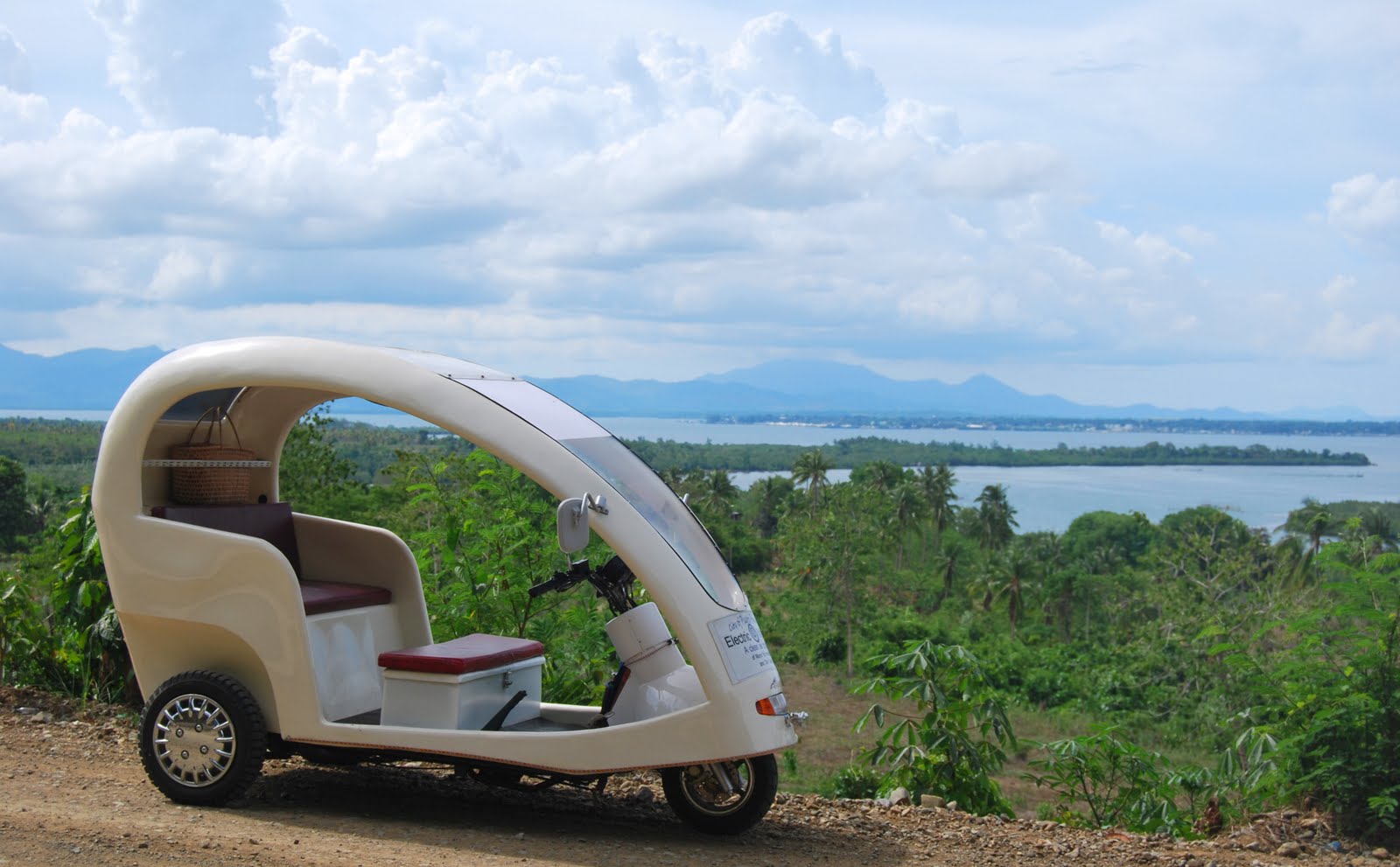
Unfortunately, after driving the units daily everywhere he could, Dave deemed the body unsafe for ordinary trike drivers because of the blind spots and also knowing they would be overloaded and people could possibly fall out. He refused to sell these particular units to the city. Instead, he worked with a local mechanic, and body shop, William Russel on a design that would accommodate more passengers with room for luggage or small cargo.
 |
| The eT4 electric tricycle |
This unit was called the eT4. Dave had the prototype made by William, the motors tested by Dave. This was also a test to see if he could provide a livelihood to local by making more grassroots type units whose bodies at least could be easily assembled. This unit still works to this day. This body could also be easily upgraded to a more fancy fiberglass version.
This project was never completed for many reasons. One is that the Mayor's term was coming to an end, and the corruption in BOC with them charging more than 400% the value of parts coming in to make more units. LTO's arbitrary charges for registering the units, which he found out when he went to register 20 electric motorcycles with them and each registration was a different cost, even though they were consecutive models. All this was very disgusting and discouraging to Dave. How can you turn a profit when all these undocumented expenses were being extorted?
He closed his test shop, bought a farm lot in Luzviminda, and concentrated his efforts in building a life and home there. He put his skills to work installing solar electricity so he could tolerate the many blackouts PALECO has almost every day. He also loves to go out on native bancas, and he has one banca whose fishing lights are totally solar.